










Related Links
Case Updates
Krishna Adhikari
 On 6 June 2004, Krishna Prasad Adhikari, a resident of Fujel village of Gorkha District, was murdered in Chitwan District by Maoist cadres. Krishna Prasad was visiting his grandparents after having taken the SLC examinations, and he was abducted from Bakullahar Chowk by men who came on a motorcycle ...
 Maina Sunuwar
 Around 6 am on February 17, 2004, a group of RNA soldiers arrested Ms
Maina Sunuwar, a 15-year-old schoolgirl of Kharelthok VDC-6, Kavre
district. She disappeared since her arrest. Her family members, with
support from villagers and school where Maina was a student, visited
detention centers ...
Around 6 am on February 17, 2004, a group of RNA soldiers arrested Ms
Maina Sunuwar, a 15-year-old schoolgirl of Kharelthok VDC-6, Kavre
district. She disappeared since her arrest. Her family members, with
support from villagers and school where Maina was a student, visited
detention centers ... Sanjeev Kumar Karna
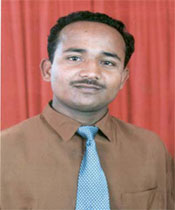 Sanjeev Kumar Karna was one among the 11 persons arrested on October 8, 2003. On that fateful day, they had gone to attend a picnic program organized by the students at a place called Kariyachauri VDC-4, and from picnic, they went to Kataiya Chowri Area of Dhanusha district where they ate some food ...
 Arjun Bahadur Lama
Hari Prasad Bolakhe
Sarala Sapkota
Birendra Shah
Bishwanath Parajuli, Tom Nath Poudel and Dhan Bahadur Tamang
Chot Nath Ghimire and Shekhar Nath Ghimire
Bhauna Tharu

AF Observed the International Day in Support of Victims of Torture (26 June) 2022
Major issues raised during the discussions were the implementation of the Penal Code 2017, the challenges of detention facilities, the protection and promotion of human rights of the detainees, and the ways to end impunity relating to torture cases. The following were the key highlights of the discussion.
- The Penal Code 2017 criminalized torture for the first time in Nepal but has not been used as extensively as envisioned, to prosecute the cases of torture since its enactment. Overall, the following were the major issues discussed in the programs:
- The overcrowding of the detention centres, lack of documentation of medical examination, age verification of the detainees, and lack of proper infrastructure and sanitation among others are the main problems in the detention facilities, which have hindered detainees’ access to justice.
- The causes of custodial deaths in Nepal need to be researched well and the State should take responsibility to investigate such cases, by forming an independent and impartial investigation mechanism.
- Training on human rights should be provided to law enforcement agencies and the police authorities who refuse to register First Information Reports (FIR) of torture victims who need to be made liable for denial.
The program concluded with the stakeholders’ commitment to draw the attention of the local and provincial governments toward the reform of detention centres and to take necessary initiatives in amending the provisions regarding torture in the law.
Similarly, AF released an annual report on torture titled “Custodial Deaths in Nepal: Towards a Framework for Investigation and Prevention." This year's report focuses on patterns of deaths in police, prison, army, and juvenile detention institutions since the new Penal Code came into operation in 2018. For the report, please kindly refer here.
Since its inception, AF has been actively working in challenging impunity and promoting accountability in cases related to torture and ill-treatment in Nepal.
The program was generously supported by DKA Austria.



Join Us