



Related Links
Case Updates
Krishna Adhikari
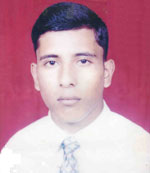 On 6 June 2004, Krishna Prasad Adhikari, a resident of Fujel village of Gorkha District, was murdered in Chitwan District by Maoist cadres. Krishna Prasad was visiting his grandparents after having taken the SLC examinations, and he was abducted from Bakullahar Chowk by men who came on a motorcycle ...
 Maina Sunuwar
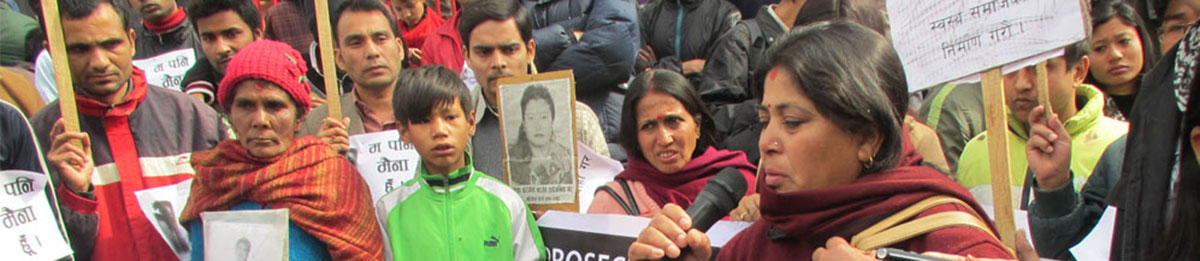
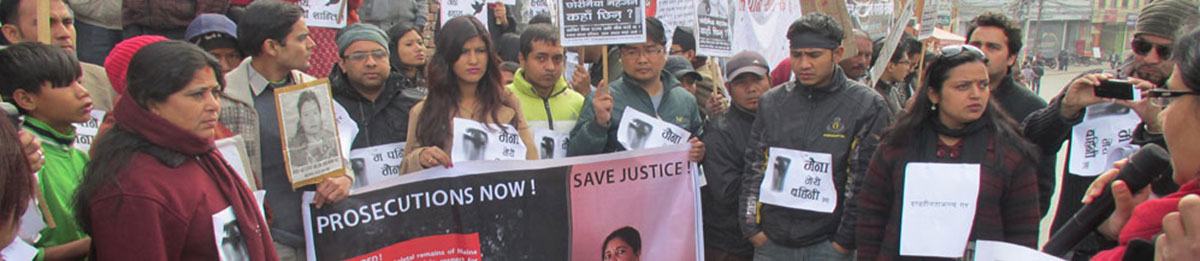
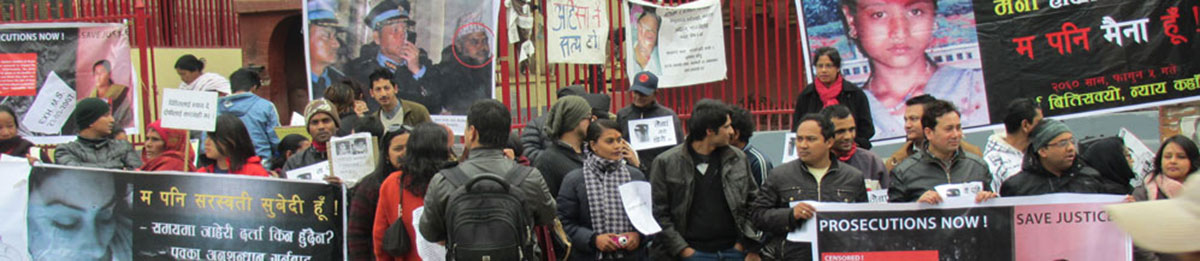
 Around 6 am on February 17, 2004, a group of RNA soldiers arrested Ms
Maina Sunuwar, a 15-year-old schoolgirl of Kharelthok VDC-6, Kavre
district. She disappeared since her arrest. Her family members, with
support from villagers and school where Maina was a student, visited
detention centers ...
Around 6 am on February 17, 2004, a group of RNA soldiers arrested Ms
Maina Sunuwar, a 15-year-old schoolgirl of Kharelthok VDC-6, Kavre
district. She disappeared since her arrest. Her family members, with
support from villagers and school where Maina was a student, visited
detention centers ... Sanjeev Kumar Karna
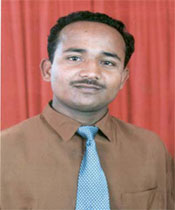 Sanjeev Kumar Karna was one among the 11 persons arrested on October 8, 2003. On that fateful day, they had gone to attend a picnic program organized by the students at a place called Kariyachauri VDC-4, and from picnic, they went to Kataiya Chowri Area of Dhanusha district where they ate some food ...
 Arjun Bahadur Lama
Hari Prasad Bolakhe
Sarala Sapkota
Birendra Shah
Bishwanath Parajuli, Tom Nath Poudel and Dhan Bahadur Tamang
Chot Nath Ghimire and Shekhar Nath Ghimire
Bhauna Tharu

Chief Justice Shrestha Reminded Judges and Stakeholders of Non-Amnesty for Serious Rights Violations
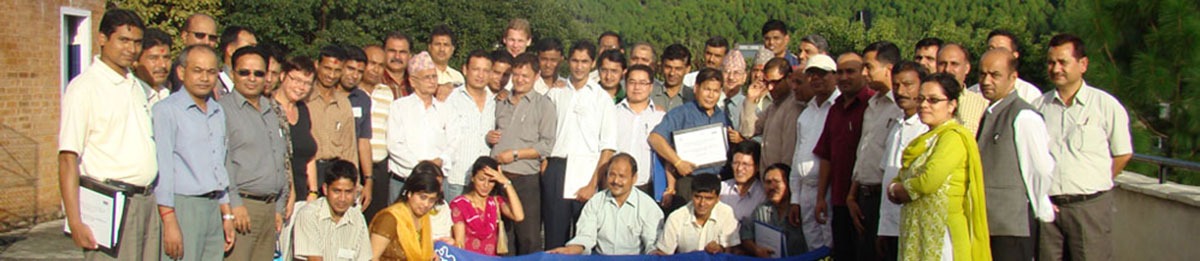
Opening the judicial dialogues on 9 April 2024 jointly organised by Judges Society Nepal, International Commission of Jurists and Advocacy Forum-Nepal in Dhangadhi, Chief Justice Shrestha told judges and other stakeholders about the jurisprudence that the Supreme Court has established in rejecting amnesty for serious violations. He also talked about requiring victims' and stakeholders' participation in the process of developing a legal framework for transitional justice (TJ), recognising reparation as the rights of victims, and the TJ system not replacing the regular justice system.
While providing international standards and global perspectives on TJ, Dr Mandira Sharma, Senior International Legal Adviser for the International Commission of Jurists, highlighted how the original understanding of TJ as the alternative to prosecution is changing over the years to embrace a holistic notion that includes not only truth-seeking but also prosecution, reparation and guarantees of non-repetition as well as memorialisation.
She also highlighted how the development in human rights law, humanitarian law, and international criminal law shapes and informs the evolution of transitional justice processes and mechanisms and victims' rights to effective remedies. Dr Sharma also provided a brief update about the ongoing TJ process in the country.
Justice Til Prasad Shrestha from the Supreme Court of Nepal clarified that no law has prevented the regular courts from reviving the adjourned cases of the armed conflict pending in the courts and settling them. He also shared examples of Maina Sunuwar and Dekendra Thapa cases revived and settled by the regular court. He committed the SC's support and assistance in addressing the challenges judges face in reviving cases related to the armed conflict and said that the safety of the judges shall be ensured.
The chair of the Special Court, Justice Tek Narayan Kunwar highlighted the consolidated jurisprudence produced by the Supreme Court of Nepal that guides the judges in delivering justice in conflict-era cases.
Judges discussed challenges in investigation and evidence collection in conflict-era cases and suggested some revisions in the Evidence Act and procedure for cases involving serious human rights violations.



Join Us